Introduction
This is an unordered collection of thoughts and observations I’ve derived after joining a wonderful startup called BioScout in early 23’. This is partly the reason for the lack of writing since my previous posts as I’ve been very engrossed in our mission as well as my personal day to day life only providing me oxygen to write very recently.
I’m writing this for twofold reasons, one as a marker for myself after a couple of years to denote the things I’ve learned; hopefully in a few years I can look back and either laugh or be proud of my shortsightedness or sage thinking at this time. Secondly for anyone else who’s thinking about joining a startup, is curious from the outside, I hope this can serve as some insight into what it’s like inside a startup. I would have appreciated some longer-form reading like this before I had joined BioScout (or a similar company) to get a sense of what I was stepping into, or maybe I wouldn’t have made the same decision, stepping in blind was maybe an important leap of faith for myself.
Thanks
I always like starting my writing with a thanks to the people that have inspired me and their impact on why I’m writing and the significant role they’ve played in my life.
- Jeremy Howard & Rachel Thomas | fast.ai
- Jeremy and Rachel have continued to play such an important north star for me of the kind of data practitioners (and people) I aspire to be. They work on what matters, they share generously, they think hard about what they’re doing, and they are always open to change. Their writing and technical work I am forever in-debted to, I also believe their work on nbdev was substantially responsible for me landing my role @ BioScout which has been one of the best decisions I’ve ever made (note I think luck deserves a huge amount of credit here rather than my foresight).
- Lewis, Tony, Tom | BioScout
- For taking a chance on me joining BioScout, I am forever grateful for everything I’ve got to experience, I’m confident it’s changed the trajectory of my life in such a positive way, and I’ve met such wonderful people. It’s been overwhelmingly joy filled at BioScout, and I’ve learnt more in two years than a decade at a larger institution.
- Malcolm
- For giving me the push to make a change which lead to BioScout, for similarly being generous with your thoughts, time, advice, and example to live by. Your leadership and perspective is incredibly influential on me and consciously or unconsciously I’m sure I’m modelling and evaluating myself by the example you put forward.
- Everyone @ BioScout | Departed & Current
- I believe massively in what we’re doing, I’ve never been at such a talent dense organisation of such diversity. Especially for those that have departed, even before my time here, thankyou for everything you put into the people and place, we stand on your shoulders, and I know that every person played an important part in us even getting to where we are. I am lucky and proud to be able to do such fundamentally interesting work across so many interesting domains, having biology, mechatronics, agriculture, AI, all under the same warehouse is a truly special thing, I don’t know how many of these experiences, if any more in my career I’ll actually get to enjoy so I’m savouring the one I’ve got.
Unsolicited Advice and Observations
This is my collection of observations framed as lessons or recommendations for those who may not have been in a startup before, are joining soon, or are thinking about joining a startup. Ultimately I’m recording my thoughts and emotions whilst experiencing this part of my career, after the BioScout chapter is over, whenever that is, I’m sure I’ll have a different set of reflections and maybe my lessons and experiences here will have a different colour to them.
Why I Left a Comfy ASX 5 Job
A brief story on why I left for a startup, and framing for what I’ve learnt
When I was at a large ASX 5 bank, I had a lot of creature comforts, I knew the company wasn’t going anywhere, I got to work with really smart people, it’s an endlessly interesting and deep domain, and I got to learn about structured work at scale. Of course this all comes with it’s own suite of negatives but anyone who complains about a well paying job at a big business which isn’t sending you insane I think needs to get a reality check. Your quality of life is generally excellent and there’s an enormous amount of worries and concerns which are simply removed from your life.
However these big companies are insane in the way they work. In a bank, people will unironically say you can’t do something because ‘we don’t have the money’, and well paid, well educated people will all nod in agreement that this is sound judgement. In a place that keeps all the money for society, saying we can’t afford a software license to speed up work, or a new laptop, for whatever reason, is brainless speech at best. If you’re in these big companies, its important you go into work each day knowing it doesn’t make any sense how it works, and spend your days fixing these crazy and unthoughtful rules and processes that have been placed before you.
However after ~5 years (which is a particularly lucky/long run after being a graduate, I had great people leading me), I got worried that I’d only be capable of working inside these behemoths, and more worryingly, I met people who had acquired what I would consider brain worms or some sort of zombie virus which had convinced them that this big company was totally functional and ‘made sense’. The worry that I might catch this virus put the fear of god in me and I realised if there was anytime to figure out if I could survive somewhere else was only going to get harder the longer I waited.
Malcolm (My 2-up and mentor for my entire tenure) giving me the tap on the shoulder to think about doing something else, and this fear, were the catalysts to change roles and look for something new, in particular something different than just another big behemoth. Moving from one of the largest companies in the country in finance, to a small startup in agriculture felt like the biggest domain & size leap I could imagine, if I could survive that, I could survive anywhere, it was a fly or die leap.
Everyone Has to Paddle
Don’t Point, Do
At ~25 people, or whatever your small-ish company is, those who ship code, talk to customers, make payroll happen, sell, and solve problems in the field are all that matter, they paddle the boat. Anyone spending their time overly planning, designing, and pointing at what needs to be done? They’re being barnacles on your hull, figure out how to get them paddling; I myself have been a barnacle at times, and helpful feedback has got me focused on paddling again.
An example that comes to mind is worrying about a multi-year product vision, when the backlog could be better with a couple of hours hard focus. Don’t chart out a huge map of where the boat needs to go in the next 3 years when you need to focus on patching the leaks and helping paddle, there’s too few people, and too many leaks. You’re so dynamically shifted by the short term seas ahead of you, make sure you have concrete plans for the next month, a pretty good idea of the next 100 days, and a soft vision for the year, more than that is too much to be effective. Your domain expert “do’ers” will know the important challenges ahead, your sales team will know what customers are screaming for. Everyone needs to be in the arena, getting their hands dirty. When someone’s main contribution is telling others what to do rather than doing it themselves, you feel the drag immediately, and you need to raise this as a problem.
An easy mistake is to write-off ‘non paddlers’ too easily, spot the barnacle and be done with it, however, often people want to paddle, they just might have not learnt how to, especially at a weird thing like a startup, it might be as simple as helping them see the part of the boat they need to care about. It’s very easy to get distracted with other parts of the boat and neglect your own area of expertise. Often people are coming from big companies (exactly like I did) and working on a super tanker at a place like that is a totally different beast, fundamentally its a separate muscle to work and grow; People often have the capacity to paddle that you want, but joining a new company is hard and helping newbies, or even helping the old-guard break their habits is a big part of bringing people along for the mission.
We could still get better at pointing vs doing, I’m not saying I’ve solved this equation, but it’s taught me that at this scale, “doing” is essential. The paddlers keep you afloat, doing anything else risks the boat sinking. When you’re all paddling hard, the sails are full, when the wins come, you are completely rushed with endorphins about the rocketship you’re on, you realise you’re doing something special, and you’ll be hungry for the next big ‘transformation’ the company goes through. It’s incredibly bonding and special to achieve these things with other passionate people and I wouldn’t change it for the world.
You’re Sailing In a Foggy Ocean
It’s OK to not ‘Know’
In a startup, especially one doing something novel, you can’t see what’s ahead, that’s ok! This is what makes the whole thing fun, don’t let it freak you out. It’s easy to get caught up in the fun of it all, look out to sea, realise you can’t see land, and have that anxiety waterfall wash down your spine into your belly, but let it pass.
The fix isn’t pretending you know the way, it’s getting comfortable making calls with incomplete data. Senior leaders especially need to model this, it absolutely kills me when those running the whole show inappropriately broadcast how panicked they are. Everyone else in the company has less agency, less power, less choice, and you’re telling them you’re worried? What on earth are they supposed to feel and think, and they’re without all the privileges of leadership you’re blessed with. Make the best decision you can with what you have, adjust when you learn more, and keep moving, paralysis kills faster than a wrong turn you can correct.
It’s also totally ok to actually be freaking out and to talk to your peers about it, they might be as well, and you can relinquish the breath you’re holding, find a solution, and overcome what you’re worried about. Don’t let the worry consume you, I know its scary being in a startup, but its so special and rare to even get the opportunity, cherish it, and turn the adrenaline into action, paddle.
Your team needs to see you navigate ambiguity, not fear it. When leaders own uncertainty without anxiety, it gives everyone permission to move forward despite the fog, it engenders so much trust in your judgement and people will follow you with confidence into big swells and thick fog, it’s powerful to lead people through uncertainty. You won’t always be right, but you’ll be moving, learning, and adjusting, which is the only way to find your way through.
Make sure you worry about things you can control, notably the processes and outputs you’re responsible for and help the people you can. Make your circle of concern match your agency. If you’re panicking about the weather, or market conditions that you can’t control, there’s nothing that can save you, you must accept your limits, wash from your mind these ‘uncontrollables’, they’re taking up valuable space in your limited capacity for stress and problem solving. Most importantly focus on the high value work that only you can do, don’t obsess over other teams or domains, always contribute where you think you can help but don’t try to design hardware you don’t understand, or ‘own’ a product you don’t/can’t build, do the magic that makes you a witch or wizard.
You Should Definitely Join One
(As an Engineer), It’s the ‘growthiest’ thing I’ve ever done
I’m confident that I grew more in the first 6 months than maybe the prior 1.5yrs at my prior role, I got squeezed in every way I’d never been squeezed before, and most of ‘the things that mattered’ at my prior role were barnacle behaviour, or bikeshedding, we will talk about this in a later topic.
Yes I encountered stress and worry during this first chunk of time, but through every trial I emerged a better professional and person, whilst having an enormous amount of fun. I had/have wonderful, smart people to work with, you have to make magic with extremely limited capacity and resourcing, but you do it, and nothing has ever been as satisfying as the successes and growth we’ve experienced as a group of people on a mission together.
The squeezes are from making sure that everything you do each day is tangible, it makes a difference to the product, or is building to a big bang, step-wise change in capabilities for the business. Any ‘barnacling’ about making plans you likely don’t need, overstructuring your backlog, and not doing the gritty important hard work was immediately tested and weighed, this I had not experienced before. In a big corp, you can have a project that was supposed to be delivered last year, and you can unironically say your sprint is ‘on-track’, and others will agree with you. You can miss huge deadlines and the company will be fine, however in a startup, these deadlines can genuinely be life or death, you may have an incoming increase in service throughput, and if you have no way to satify that with your technology, you die, plain and simple. This consequential, and non-trivial adversity hones your attention, hones your effort, and makes the wins genuinely phenomenal. In a big company, wins can be very ‘whatever’ and holding yourself to higher standards is often up to your own volition, or some small subcommunity of high performers which you may be a part of.
At BioScout I’ve met more interesting people from more walks of life than I ever would have expected in such a short time period, often in larger companies, if you’re a software engineer, you talk to other software engineers that went to the same schools as you and did similar stuff to you. Everyday I’m in the same room as mechatronics experts, doctorate biologists have decades of spore knowledge, amazing viticulturalists, almost everyone is multi-lingual and most days there’s cuisines and culture flooding from around the planet just because people are generous and sharing about their worlds. Working on your passion, around other passionate people, sharing different domains and culture, with a common mission, is a rare and beautiful experience which I’d recommend to anyone
The Most Expensive Thing
Opportunity Cost > Everything Else
Carl Sagan - “If I finish a book a week, I will read only a few thousand books in my lifetime, about a tenth of a percent of the contents of the greatest libraries of our time. The trick is to know which books to read.”
Carl Sagan is one of the goats and this simple quote illustrates my point better than I can, even given an extraordinary output capacity, it doesn’t even scratch the surface of potential efforts available to you, focus on doing only the most important thing at all times. It’s likely that at any given time you’ll have 20 things you can think of to do that would help the business in a given year. You probably will only have capacity to complete 3, maybe 4, the most important job everyone has is making sure they’re picking the best of the 20. The difference between #1 and #2 might be a 10x in output, imagine the total waste of working on #13 and #8 instead. Don’t stress for a moment that you can’t increase your capacity to 20 tasks, that’s not the objective, do not focus on raw output, you’ll just burnout and you won’t do what matters!
I know that it’s really hard to have the discipline to not focus all the time on ‘urgent’ unimportant work, (see the eisenhower matrix) you’ll be stunned how often urgent isn’t actually urgent, and important isn’t actually important, you will get many requests to work on #18 and #12 because someone just called to say they’re big problems and we ‘have to do something right now’; despite the fact that solving #1 and #2 would eliminate these scenarios entirely. I’m not saying don’t be tactical, if a huge nuke goes off, drop tools for whatever you’re doing and go cleanup the fallout, but humans are humans and they’ll tell you there’s nukes going off when theres dead flies in the windowsill. Proper workflow management like not flooding your sprint with inbound tasks immedietly (even if they’re 1 pointers, the context switching costs you a bomb) and having short but reasonable lockouts for completing planned work is critical, if you can’t promise 10 days of work, you’re completely sunk, rip the emergency cord and fix this immedietly.
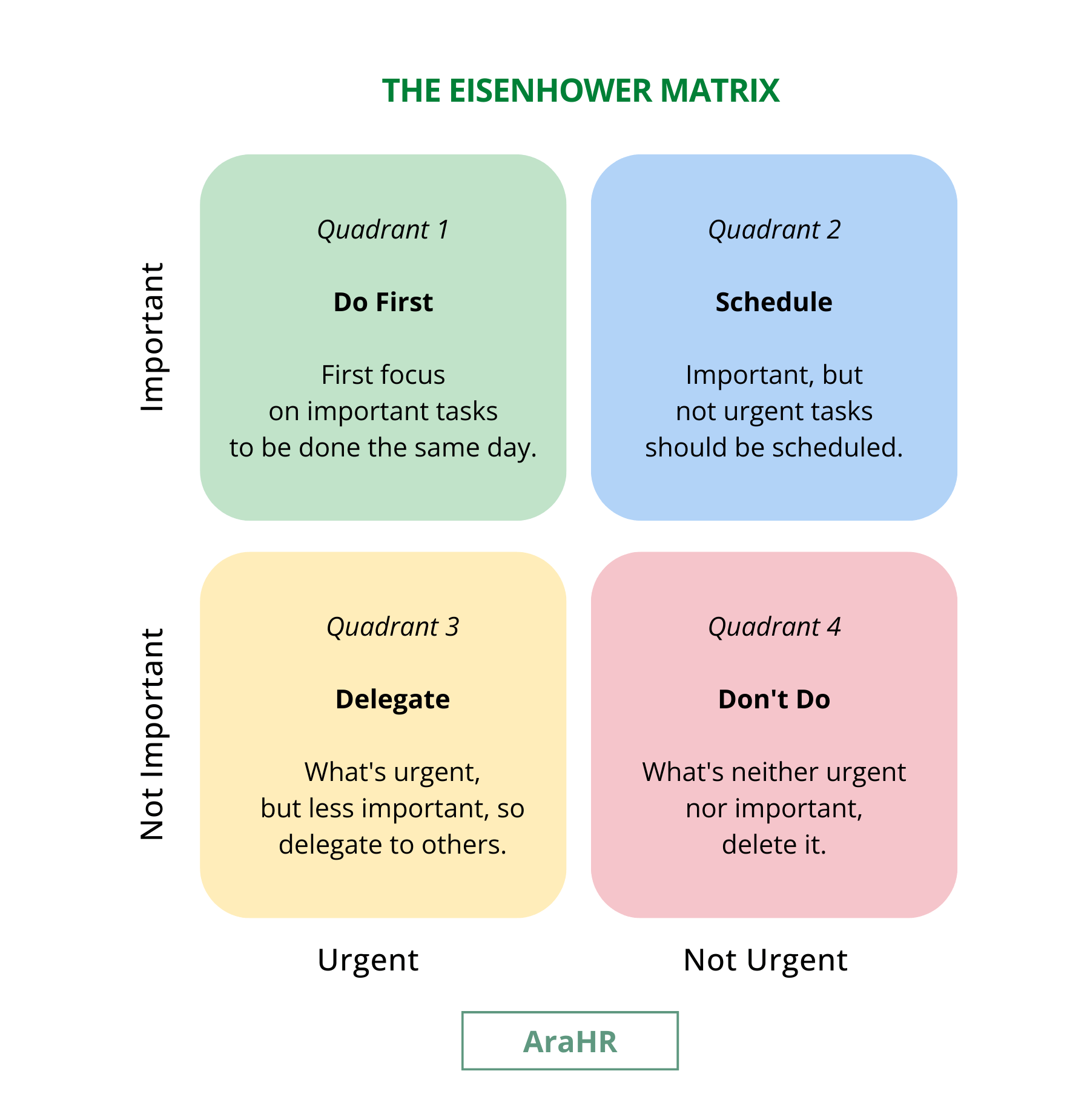
The one thing that panics me most about this it that no one talks about opportunity cost for what it is, everyone is focused on increasing capacity, or penny pinching and being pound foolish. Spending half a day to save $19 on a SaaS subscription is literally going backwards because of your salary cost ONTOP OF all the things you could have done in that time, double penalty!
This is a great reflection moment to take stock and think about if you actually know what is important, if you are ‘iffy’ on why you’ve picked #1 and #2, and its hard to tell if #6 or #4 are just as good, talk to your senior leaders, go grab the CEO for coffee and figure out what actually matters. It’s very easy to get obsessed over internal metrics or ‘resume driven development’ by working on cool stuff relative to your domain, and actually that’s all fluff to the rest of the company, no one cares if your neural net architecture is state of the art if it doesn’t change the service to the customer.
Don’t Trick Yourself
You Have Choices Everyday
Do not blame anyone else but yourself for how you spent your day, we all have free will, we choose to go to work, we choose when we go home, we can quit, we can say no. Putting your hands up and saying ‘my hands are tied’ in almost any scenario is insane to me, don’t accept a day of meetings and say “I can’t get anything done today”, you’re choosing to go to every last one of these conversations. You have legitimate capacity constraints, and demand may be outstripping this, but this will simply always be the case at a startup, no matter if you’re double or triple the size you are, spend the effort on being deliberate with your time, it’s not anyone elses.
Don’t do stuff because it looks or smells good, you’re putting holes in the ship and jeapardising the beautiful, rare, precious opportunity that is your startup. Maybe the trick will work for a bit but you’ll get caught out soon enough and whether its spoken about or not, people will get fed up; its not in your interests, just don’t do it. A classic example of ‘busy work’ that also has the allure of importance is working on ‘strategy’ or ‘frameworks’, everyone knows they’re very serious words and you must be a very serious person to be thinking ‘strategically’. I get it, you can avoid doing the ‘gritty’ work like cleaning up data in the CRM, calling a customer, pushing a sale, writing material you know you need to. It’s a ‘smart’ way of procrastination, and a good trick to pull on yourself, you can go home and know you’re a strategic visionary, ‘product minded’, and a ‘senior’ leader.
The other one that sends my head into a spin, is ‘needing to hire more people’, “if we just had more people and money all my problems would go away, and I can’t solve any of my current problems because I’m completely out of capacity!” What a load of hooey! I will bet a good chunk of money that basically everyone (including me) is not being scrupulous enough with the time budget they have. The irony this produces is that the most effective teams, doing the most with the little, are often invested in the least, because they’re making magic on a shoestring, and the noisy, timewasting domains, demand more resources and people. You can drastically increase your capacity and output by being more effective with that time, and saying no to things. You can’t make more hours in the week, stop trying to, and stop making excuses for not getting things done, I certainly think you’re an un-serious person if these excuses are genuinely brought up as reasons why things don’t get done, and you should too.
I promise you being deliberate about your time is more satisfying anyway, you’ll never quite get the balance right in hindsight, if you’re a do’er and a planner, you’ll always feel like you did too much and didn’t plan for the team or vice versa, that’s ok. Just make sure you’ve got some conviction about how you want your day and week to pan out, if you’re swayed by the wind, and then you put your hands up in panic saying “you’re busy”, change something, there’s nothing in you way, even if it’s your leadership, manage up, that’s still in your wheelhouse.
You All Sink or Float
Everyone is on the Same Boat, Act in Good Faith
For better or for worse, you’re all on the same boat, and from the outside no one cares one bit who’s doing what, if your startup explodes and crashes on a reef, no one will respect (if anything it’ll reflect terribly on you) you saying “oh but I kept my part of the deck very clean whilst the boiler room blew up, it’s not my fault”. You have to trust that everyone is there trying to make the sails sing, and you should act the same way. Still make sure you’re getting the barnacles off and looking after your part of the boat, but it doesn’t matter what anyone is called, or what their role is, stop the leaks, cleanup around you, help people even if its sweeping the floor, nothing is beneath anyone, get rid of ego. As soon as you feel like someone isn’t acting like you’re on the same boat, or you aren’t, this is a death rattle, drop tools to change your behaviour, or help them pickup a paddle and trust each other.
Be Dynamic
It’s Why You Joined a Startup, Respond Intensely to Feedback
We’re human, and its easy to figure some stuff out and stick to it, especially if that garnered success in ‘your last org’ or you’ve been well liked for a long time at your current org. Getting ‘stuck’ in your ways is a form of mental barnacles that I’m always trying to shed, new people and a change in environment can help you shake these off, but it’s something to really pay attention to. One of the paradigm shifting experiences for me at BioScout has been hearing direct feedback, sometimes twice or three times, I’m no saint. It may have been about what objective I should deliver on instead of my current focus or a piece of communication that wasn’t effective, making a choice, and seeing the fruits both personally and for those around me is fantastically satiating. It feels like this magic loop that you can go around forever, and constantly you get a bit better each go.
The booster at a startup is that you have a consistently changing environment, the business, the people inside and out, as well as the problems you need to solve are re-arranging themselves on a monthly basis. This gives you a reliable refresh of situations and problems to discuss with your mentors that you can lean on to develop yourself at a rapid pace. Take advantage of this pace of play and try stuff out, it’s kind of mandatory that you try new things at a startup, otherwise you won’t make it, so steering into this skid is an important emotional and mental commitment to make. The penalties for not trying this are expensive, and it’s one of the reasons you went to or want to go to a startup right?
Back Yourself & Your Team
Tall Poppy Syndrome and Fear will Kill You
There’s a fantastic quote from Jeremy Howard in his “20 Years of Startups in One Hour” talk which I love which is along the lines of:
~“To be a tech founder requires a whole lot of arrogance, you need the arrogance to believe that you can actually build something other people are going to want to buy, and other people who will come to compete with you won’t do as well as you, you need the arrogance to believe that you can win, which is a lot of arrogance. But you also need the humility to realise that other people come along and have better ideas than you and you should sometimes borrow those ideas. It requires this weird combination of great humility and great arrogance, and in Australia people mainly notice the arrogance.”
I agree and have experienced the sentiment in Australia that people generally poo-poo people having a go, despite ‘having a fair go’ being an idiom the nation and its politicians recognise as a core trait. There’s something about trying to do something ‘new’ that we really try to cut down and I think that’s awful.
Don’t be afraid of having a crack, its the whole point of startups, don’t worry about being arrogant, it’s partly a requirement of being part of the ‘having a crack’ crowd. Secondly don’t let the fear of your step out into the open being your demise, it’s also a cost of doing business when you’re trying to do something new, know that these are innately facets of the nature of working on these kinds of problems and that the cost is totally worth it. This extends to your team as well, if you’re going to bolster a belief in yourself that you can do these things, believe in them strongly as well, one of the most profound experiences for me has been this trust at BioScout. Whether it was talked about or not, and whether I was even comfortable with this fact at the time, I was handed the keys and some pretty dire consequences if I didn’t figure out a whole bunch of novel things quite quickly, but with the amazing people around me trusting me to ‘do the magic’, I came up with the goods. There’s been a few other circumstances where I’ve noticed other people are put in these positions and when we as a team ‘back’ them to do the same, we’ve completely transformed as a business, and people start coming up with magic, this is powerful stuff.
This all stems from believing in yourself and your team, the confidence oozes out and is contagious, especially top down. Deep down, ‘knowing’ you can actually make it as a firm is a fire you must tend to and keep warm, if this fizzles to embers, this is a dire prognosis for your purpose and you need to get the bellows or do something else, not keeping hot embers is also contagious and the ‘down’ mood can plague the whole office.
Culture is Everything
You have to Work Harder on It
One of the most dominating indicators for how well we’re working as a team is how everyone is feeling and ‘the vibe’ of the office, whether that’s slack or the physical space you share, it’s all the same cultural fabric you’re sharing. It’s the most intangible and hard to measure thing, some people have a good ‘vibometer’, others are completely blind and are often ignorant of their contribution to the energy of the space, but if I could only measure effectiveness with one thing, it’d probably be the vibe.
This seems contrary to all the other more observable and actionable things I’ve written above but when we’re feeling ‘hot’, we’re crushing it, and when we’re in survival mode, everything slows to a crawl. Whether its the symptom rather than the infecting agent, I’m not sure, but please spend time listening how people are feeling and paying deep attention to what are the uppers and downers of the space, it’s the rosetta stone for what the #1 and #2 things you should do are.
The actionable take away is that culture isn’t an accident, it gets set most strongly by leaders and their habits, whether spoken or observed, people notice when people turn up to work, if they’re pushing features, selling product, or faffing about. Conversely everyone has impact on culture, if a new joiner is putting in extra hours cleaning up the space, being generous with their effort, the tide lifts all ships, it’s contagious and everyone has a part to play.
Think about your own firm: - Do you get to spend time as a team not talking shop? - Do you get to learn about other people’s work and interests? - Do you ever take time aside to just bond as a team? - Do people share their wacky ideas for what we could change at work?
If you answered no to those questions, you might not have a culture of intellectual or social safety, how is anyone supposed to go out on a limb and try something new if you never have unstructured time together or you don’t even understand eachother’s worlds or personalities?
Culture is a very real, intangible, hard to measure, and impactful facet to work on, and you have to consciously work on it harder than you think you should, I also promise it pays huge dividends. I fundamentally believe one of the most important things BioScout does each year is the camping trip, it’s kind of impossible to not relax a bit after a few days at the beach snorkelling together, and that comfort pays idea coupons for the rest of the year. Who wouldn’t take the trade of a 3 day investment for ~230 days of improved effectiveness across the whole company, I’d take that trade.
Hiring: Talent × Attitude² + Experience ÷ 4
The Perceptron of Success
\[Talent \times Attitude^2 + Experience/4 = Effectiveness\]
This is a short note on hiring, every single ‘brilliant’ person we’ve hired had oodles of the right ‘attitude’ and worked hard, when these people also had talent, they’re absolute monsters which we need to golden handcuff. We’ve had ‘talented’ people, and we’ve had people with lots of experience, experience has been the most awful indicator so far of being effective, and I think talent is a pretty good indicator.
The right attitude will be very particular to your firm and what you need as a group, for us it’s always been enthusiasm for the mission & ego-less help and work ethic. In our particular situation, everything else we can teach or comes easy but it’s impossible to get someone to be generous with their work and be excited about what we’re doing if they’re not already of that disposition. We’ve had people come through with years of experience and they’ve spent their entire tenure on ‘strategic thinking’, ‘vision’ work, or finger pointing what needs to be done, instead of paddling themselves. We’ve also been lucky to have incredibly talented people come through but who were also fickle with their efforts, both scenarios have proven themselves not good long term contributors.
The title algorithm is my current opinion on the balance of power between this facets but this is a very counter-intuitive balance from what I would have thought before going through so much hiring myself, I certainly assumed experience and talent would tell a bigger part of the story, and its certainly not what recruiters and lots of people seem to spend effort on.
You’re Alone
Embrace That
I’ll be honest that at times it can be lonely in a startup, you might be the ‘only’ person of your kin at the firm, if you dwell on this too long, you’ll feel like running away. You’re probably the only CTO, the only CEO, the only firmware engineer, the only viticulturalist, it’s totally fair for ‘no-one’ to truly understand your experience and for that to be an isolating truism.
What a privilege! There’s a thousand people banging on the door of your hot startup to be you and you’re the lucky one, no one else has the opportunity you do, grab this chance by the horns and savour every last drop of blood spilled, there’s a long line of people who would lose limbs to be you, don’t get stuck dwelling on the malady of being so special, Icarus curses his wings.
Lean on your social network and meet other people in other companies at your scale, there’s an amazing plethora of online and in-person places to cross paths with other ‘lonely’ folk. Own it, and find a way to love it, it’s such a huge part of what makes being in a startup so unique.
Everyone is There Because of ‘Something’
We’re all trying to prove something to someone, it might be ourselves
A huge part of getting stuff done together with other people is understanding their motivations, this extends to communication as well, if you ‘know’ your collaborators, you can speak ‘to’ them and not at them.
I may be overly revealing of myself and the culture of BioScout but we’re all here with something we want to prove to someone, I was frank in explaining at the beginning that I’m in the process of proving to myself that I can ‘make it’ outside a big cushy company. That I can adapt, that I can grow in my career, and that I can persue my deep passion for machine learning, it’s impact on completely changing the planet, and how it is already changing the planet, not some hyped crypto nonsense with future promises that have taken decades to not arrive. As you can see I can’t help but reveal my purpose, others are not so transparent.
It’s what drives me, and my story at BioScout is intrinsically entwined with me seeking evidence that I am overcoming these internal adversities. Others may want to prove things to an industry they disagree with, show they can do something that a family member believed they couldn’t, or maybe the motivations are more esoteric, regardless, we all get up in the morning for ‘something’ and its important you try to deeply understand these motivations of those around you. It’ll completely flip how you perceive peoples actions, this will help you make sense of choices you wouldn’t make yourself in a deep way.
Some practical heuristics to get at people’s purpose are looking for skin in the game and incentives when evaluating decisions or communication, think what someone stands to gain and lose from their thoughts & actions. You’ll get somewhere along the lines of purpose and motivation for this character but that’s the real signal that you want to capture and its worth reflecting on this often.
What Went Well
This section is a short collection of stuff I objectively thought I did well or got direct feedback on, I want to keep the ‘wins’ section brief, I’m not narcissus and I don’t want to be, but some short easy wins I think are a helpful reference of what to look to do when you join somewhere new.
Built New Things That Worked
Creating Novel Computer Vision Work Scaled the Company
Ultimately when I joined BioScout, I had an immediate do or die problem to solve, we could barely process the throughput of imagery our devices were spitting out, and we were about to double our fleet in a couple of months. Simply put we would have not been able to operate the business going forward and I can’t imagine the company would have had any real path to survival. With some cool stop-gaps such as filtering our imagery for ‘high signal’ images to label, and ultimately some big new computer vision AI which was totally autonomous, we went from hurting at ~10 units, to basically having an infinite capacity for throughput, this really reset the emotional space of the company and was a huge notch on my belt personally, I’d proven to myself I can ‘do’ this in a new space, and the direct connection to the company changing was a chemical high I had not experienced professionally before, I’ve been hunting this ever since.
I also want to highlight that this early ‘win’ was far from a direct path, I floundered and barnacled my way as I was dynamically un-learning all my big company habits whilst trying to iterate extremely fast by myself, all of this was so far out my comfort zone, I definitely had many sleepless nights for quite a while before being able to exhale.
All I want you to take away from this section is that hard work, and making things go fast is always going to get you in good graces. Work hard, to the stuff that moves the dial, spew value at the biggest magnitude you can, you can’t go wrong doing great work.
Talked About Mistakes
Being Frank About my Wins/Losses was Fresh Air for the Culture
Before I got to BioScout, I had not reflected that a new company culture would be that different, I had assumed companies were companies in some way and in general the same rules of engagement apply. However my open style of communication, and wide broadcasting of what I was up to and intending to do at the time was a novel approach to professional work without me knowing.
I joined a fairly siloed company, despite there being less than probably 15 people, and I was frank early on about what I messed up and what wasn’t working for me, the changes I was making, and what I was going to try next, being naive, I didn’t see why I wouldn’t do this. But at the time I got feedback that this was some berlin wall like demolishment and people then immediately felt safer to also talk about their fires and worries. This leads back to the culture point of everyone having an influence, and whether spoken or not, people are observant and morph their behaviour to the average of principles they are exposed to.
In general I believe people trust you when you can talk honestly that you’re human and stuff things up, it seems bizarre to me to pretend that you’re not a fallible person but in a work context, we all play a character of sorts and it’s easy to forget that we’re genuinely just giving it a go and that’s ok, talk about it, everyone will feel better.
Mistakes
I honestly attribute a lot of these lessons and growth to our wonderful CTO Tony, it’s been one of the, if not the, most meaningful engineering partnership I’ve ever had. I’m fairly sure I’ll be lucky to find another experience like this in my career, they just don’t roll around all that often.
Planning Too Much
The Arena is Dynamic, You Need to Push the Boat
When I joined BioScout, I over invested very early into establishing roadmaps, setting out multi-sprint plans, categorising all my possible tickets, working on ‘alignment’ far too heavily. What I needed to do was pencil something out, and ship it quickly, some helpful kicks in the bum from Tony helped me build this muscle and transform the energy from an anxiety and panic, into action and direction. I am fundamentally a different engineer because of these early formative experiences at BioScout.
We’ve talked about this self-barnacling earlier, and I’m mentioning my own failure to acknowledge it was my fatal flaw early on, every now and again I gather another creature on my hull but I’m much quicker to grab the scraper and get back to pace. Try not to make the same mistake I did, it was important for me to learn it firsthand but there’s no need for someone else to, do the gritty work, get stuff done.
Getting 90% Done Instead of 110%
It Matters More to Get Stuff 110% Over the Line
I’m still working on this one but I had a nasty habit of getting stuff ‘mostly’ there in a few domains, instead of absolutely slamming one or two things into gear and pushing something decisively over the finish line at the first opportunity. 90% done stuff is often as good as 0% despite the sunk cost and effort, be deliberate with your time, and get things to the finish line, don’t let stuff sit around!
Keeping Things Tidy & Sharp
Letting Sprints Roll, Letting OKRs Bleed, Way too Expensive
This maybe should be an observation topic but I’ve also come to believe that excellence is 1000 small decisions, rather than one big great idea done well, and a lot of that comes from all the small things like keeping a tidy workspace, being an organised person, doing what you say you’re going to do, and putting things in their place. These sorts of small accretions really add up and the accumulation of the opposite, being tech-debt, eventually acts as glue from you to the ground and you can’t move anywhere without it feeling like swimming through honey.
Being scrupulous with your sprints, pushing hard to get those 10 day plans done reliably, helps you build so many things, and its a sign of other healthy habits which you can extend to wider regions of your professional work.
People Panic
Stay Calm Everytime, You Have Way More Time, And You’ll Only Make it Worse
This is something that I personally learnt at my big company role that I’m happy to have kept with me which is staying as absolutely calm as you possibly can during a crisis, no matter how large or small. Slow is smooth and smooth is fast, I always think of paramedics that don’t run to a patient because it increases the risk of injury and worsening the situation for little gain, the same will occur in your startup, but instead it will be turning your smallish production issue into a full-blown outage.
However not everyone you work with will have this mantra drilled into them! Help them stay calm and you always have way more time to solve a problem than it feels like, there’s a bias towards action and immediete choices, you’re always better off slowing down and being careful, especially when something has gone wrong.
What’s Next
I’m still on this startup journey, what do I think is next for me?
Meet New People
I’d Like to Get Out Into the Sydney Startup Scene
I’ve spent my time in BioScout being quite insular in the sense I’ve always looked inwards to the firm for inspiration and my thinking has been bound by that community. I think I could be a better person and professional to the firm if I grow my network and communities to the broader startup ecosystem in Sydney, I also hope to be of help to other people as it’s easy to think your experience isn’t unique, but to someone else it’s exactly what they want to learn from.
Grow Those Around Me
I Want to Be a Technical Lead, The Proof is if Those I Work with Get Better, Not Me
I’d like to continue to grow as a professional, the only way to do that is to see the firm and those around me getting better, my growth is a reflection of the people around me succeeding rather than myself. I’m a believer that leadership’s role is to create the environment which people thrive, setup the guardrails so that people are safe, and be the rocket booster people need to get better at their craft, none of this is my direct work output.
Deep Knowledge Seeking
I Still Want to Get Better! Solve-it & fast.ai Part 2
As someone deeply passionate about machine learning, and with a professional role where I get to express that in computer vision, I’d still like to grow my technical depth, in particular I’ll be studying the fast.ai course part 2 where there’s a much deeper dive into the inner workings of developing neural networks, and their new course via answer.ai and solve-it (which this blog was written in). I’m confident this will push me from being a competent engineer that ships stuff I can tinker with, to someone more capable of adapting new research and innovating on what’s available, I’m sure that both BioScout and myself will reap great rewards from this depth of engineering I’m venturing into.
If You’re Here, say Hi!
If you’re genuinely reading this section, it means you’ve digested everything above, I’d love to hear what you think! Please reach out and say hi, an email or LinkedIn is welcome, I’d like to talk to those who are reading my writing, and you’re most likely an interesting person if you’re at this point, I’d be stoked to get to know you.